
From concept to cinematic corporate storytelling through a GenAI-assisted production workflow.

A fictional HR corporate ad developed to test a cinematic AI-assisted production pipeline.

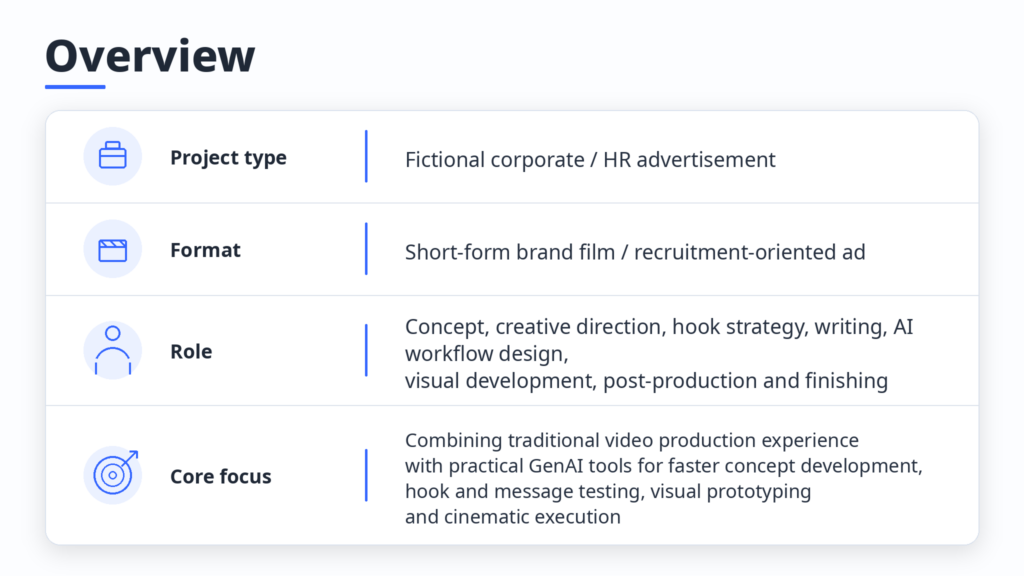
This case study explores the creation of a fictional HR corporate advertisement designed to test how traditional filmmaking, post-production expertise and generative AI workflows can be integrated into a credible end-to-end production pipeline.
The goal was not to create a generic AI video, but to develop a cinematic corporate piece with a clear message, controlled visual language, emotional consistency and a production logic close to a real client-facing workflow. 
It was also designed to be further enhanced through customised sound design and music.

AI-assisted production becomes useful when it is guided by direction, selection and finishing.

This project was developed as a portfolio case study to demonstrate how AI-assisted production can support professional content creation without replacing creative direction, editorial judgement or post-production craft.

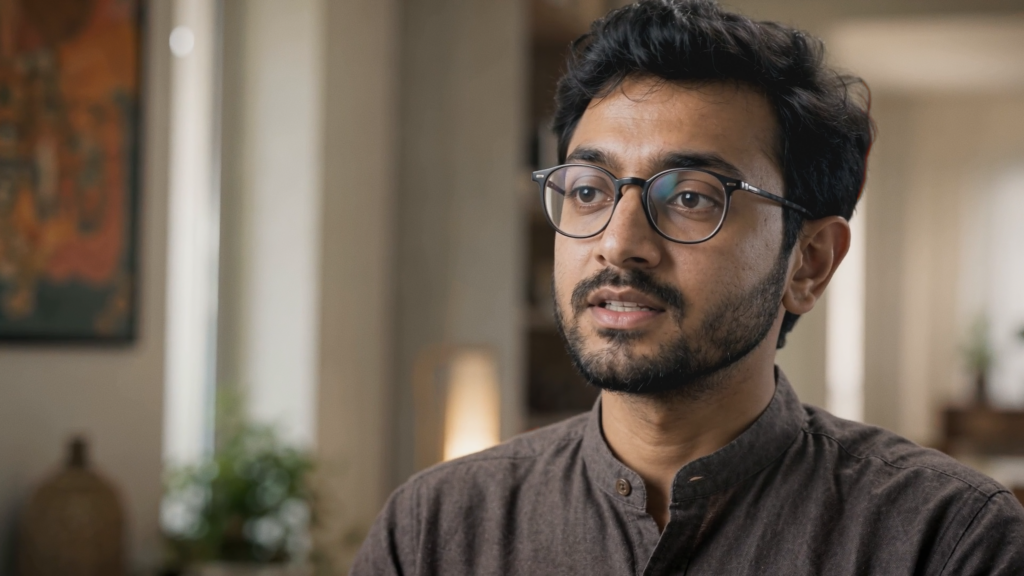
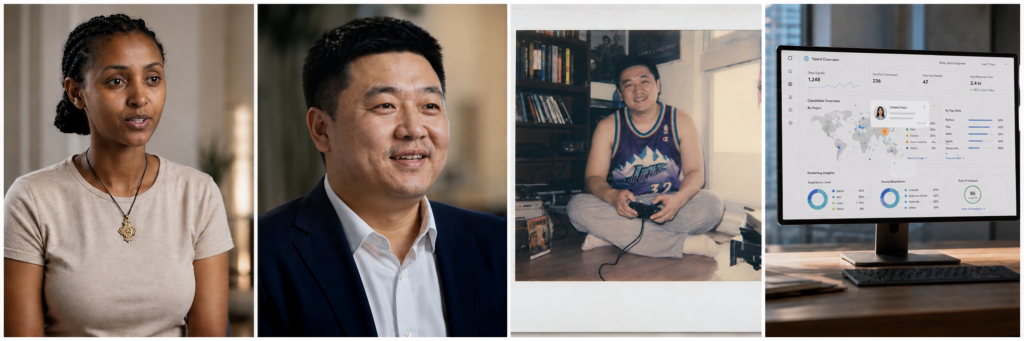
A compact overview of the final film language: human, corporate, cinematic, controlled.

THE CHALLENGE

Corporate HR communication often needs to express values such as trust, openness, inclusion and opportunity, while avoiding a generic or overly polished tone.

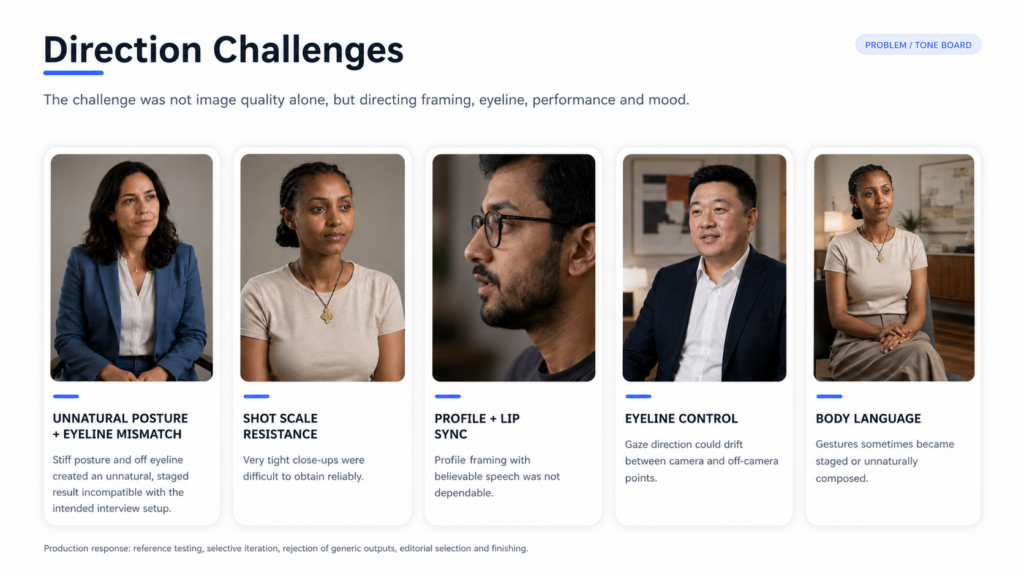
For this case study, the challenge was to create a short cinematic ad that could feel emotionally grounded and professionally relevant, while also testing how far a GenAI-assisted workflow could be pushed in terms of character consistency, believable interview-style performances, coherent lighting, controlled framing, cinematic pacing and post-production integration.

The main creative objective was to move beyond the look of a tech demo and build something closer to a real corporate film: structured, emotionally readable and visually consistent.

The project aims for a grounded corporate tone: human, cinematic, professional and not overly artificial.

CREATIVE APPROACH

The concept was built around a simple corporate idea: work is not only about filling positions, but about connecting people, potential and opportunity across different contexts.

The visual approach drew from premium documentary language rather than conventional corporate advertising. Interview-inspired setups, restrained camera work, naturalistic lighting and controlled negative space were used to create a more credible and human tone. The goal was to make the piece feel polished and professional, but still grounded, observational and emotionally readable.

Instead of relying on abstract motion graphics or generic brand imagery, the film was shaped around faces, presence and small performance details. The corporate message had to emerge through atmosphere, pacing and a sense of human connection, not through visual excess.

The visual approach was built around human presence rather than abstract corporate decoration.

HOOK STRATEGY

Three alternative opening hooks were developed to test different entry points and retention logic. Each hook explores a different way to introduce the same HR communication problem before the film moves into the wider corporate story.

Hook Options

━━━━
Hook 01

Everyday-life b-roll.
Same interview audio / everyday-life b-roll.
━━━━

This route keeps the human-first logic but moves away from the formal interview setup. The same interview audio is placed over everyday-life images of the three talents, showing personal context, lived experience and hidden potential before their professional role is revealed.
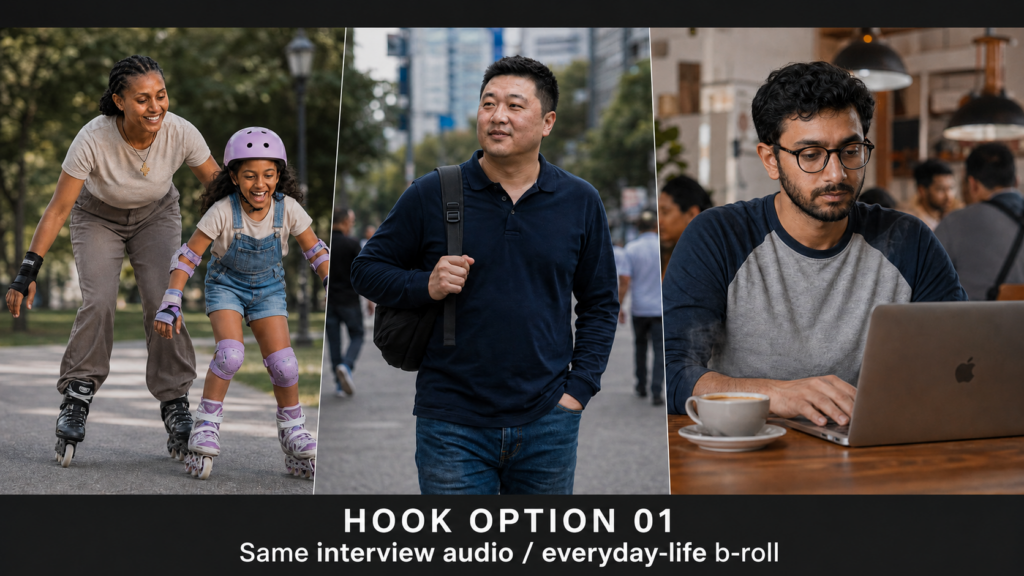
Visual logic: three parallel life fragments: family, urban movement and personal work/study context.
Message logic: the viewer first sees people as individuals, not as candidates. The corporate message emerges later, once the emotional context is established.

━━━━
Hook 02

Stolen backstage countershot.
Manager pre-interview / candid bridge into the story.
━━━━

This option introduces the manager before the formal interview begins, through a distant backstage-style countershot. The image feels observed rather than staged, creating a more unexpected and character-led corporate opening.
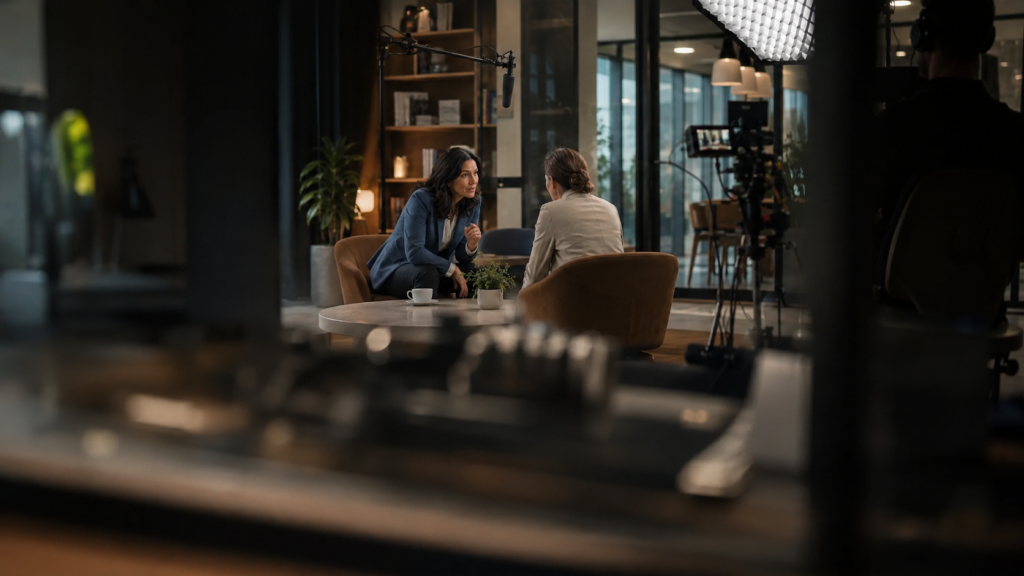
Visual logic: a discreet behind-the-scenes view of the interview setup, with crew, camera, lighting and manager visible from a distance.
Message logic: the manager becomes a bridge into the problem: before the individual talent stories begin, she introduces the human and organizational challenge behind the film.

━━━━
Hook 03
Problem-first statement.
Minimal statistic-led opening / abstract HR problem.
━━━━

This route starts with a direct problem statement instead of a human image. The opening is clean, minimal and text-led, using the line “2.2 billion people are offline. So is their talent.” to frame the challenge immediately.
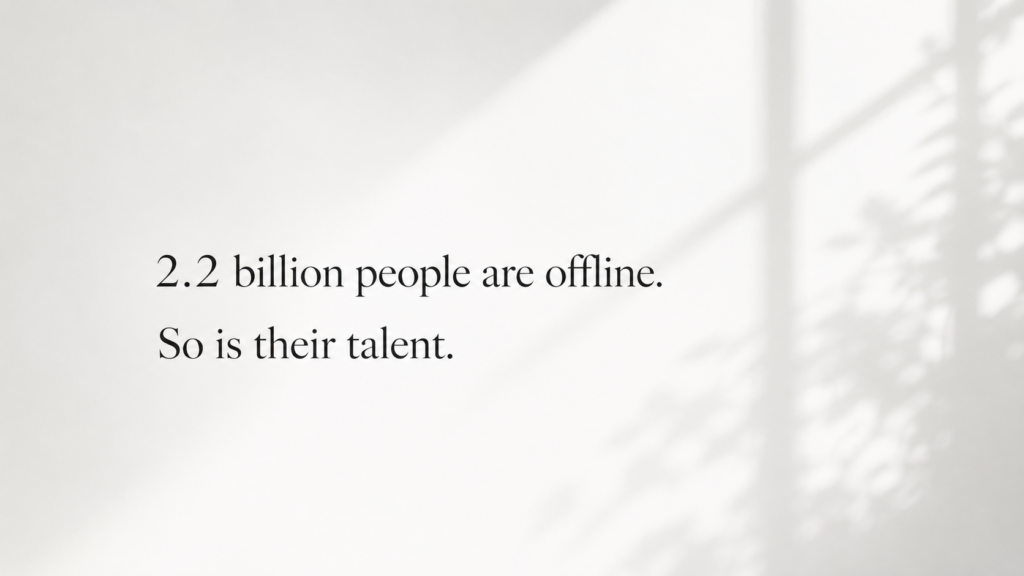
Visual logic: bright minimal background, soft natural shadows, large editorial text.
Message logic: the hook creates immediate clarity: the problem is introduced first, then the film moves into the human stories and the corporate system designed to reach them.
Audio note: a “project-aware” restrained music cue is planned to accompany the first shot. It should create a subtle link between the opening and the final brand payoff without turning the sequence into a music-driven edit.
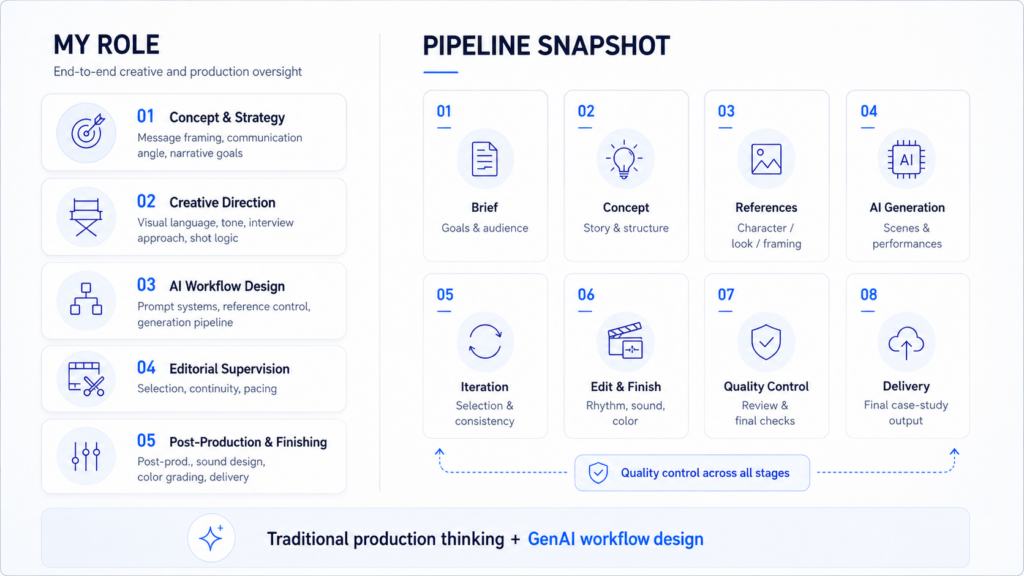
MY ROLE

I developed and supervised the full creative and technical pipeline, from concept to final delivery.


• Concept and creative direction: defining the communication angle, emotional tone, visual language and overall structure of the ad.
• Writing and narrative structure: developing the script logic, message progression and rhythm of the piece.
• Hook strategy and audience retention: defining the opening logic, first emotional beat, message entry point and viewer-retention structure for short-form corporate communication.
• AI workflow design: creating a repeatable workflow for visual development, character consistency, interview-style generation and shot continuity.
• Prompt direction and reference control: guiding framing, lighting, wardrobe, character appearance and performance tone.
• Editing and post-production: assembling the final piece, shaping rhythm and continuity, refining the cinematic flow and preparing the final output.
• Finishing and quality control: applying editorial judgement, visual consistency checks, color/look refinement, sound direction and final delivery control.

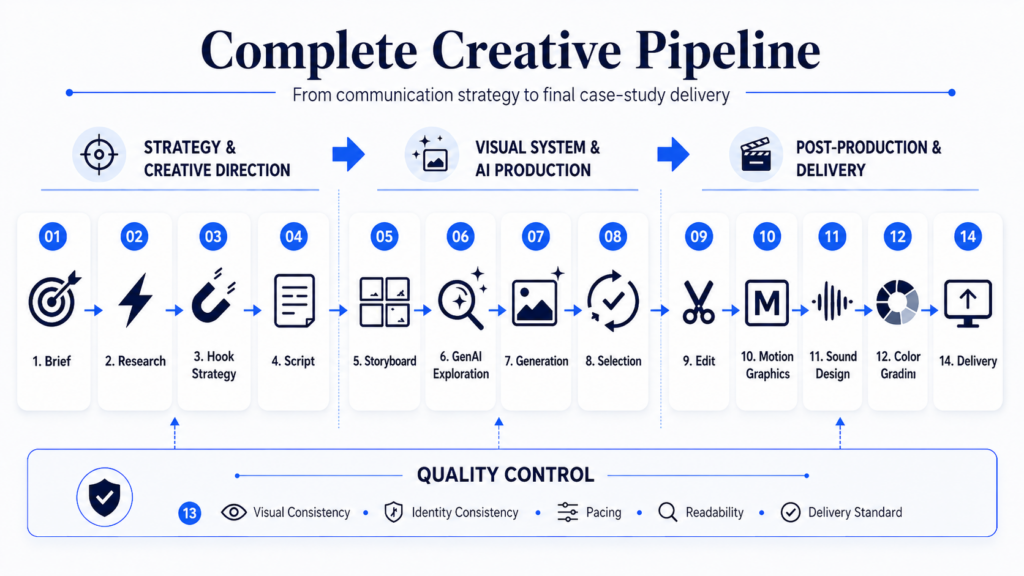
The case study demonstrates a complete creative pipeline, not only isolated prompting.

WORKFLOW

━━━━

1. Concept Development

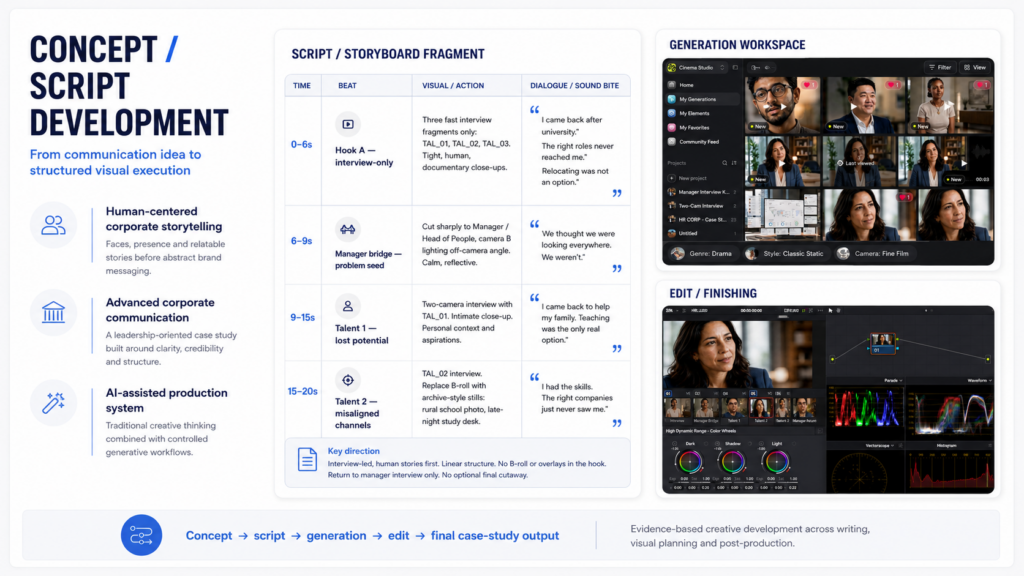
The first stage focused on defining the creative problem: how to make a corporate HR message feel human, cinematic and specific.
Instead of starting from visuals alone, the process began with the communication goal, the intended emotional response and the kind of professional audience the piece should address. This helped shape the structure of the ad and avoid a purely decorative use of generative AI.
This also included the hook strategy: first-frame readability, opening emotional beat, message entry point, attention progression and final payoff logic.

From communication idea to structured visual execution: concept, script, generation and finishing were treated as one connected production workflow.

2. Visual and Character Development

The next stage involved developing the visual identity of the piece: characters, framing logic, wardrobe direction, lighting mood and general production tone.
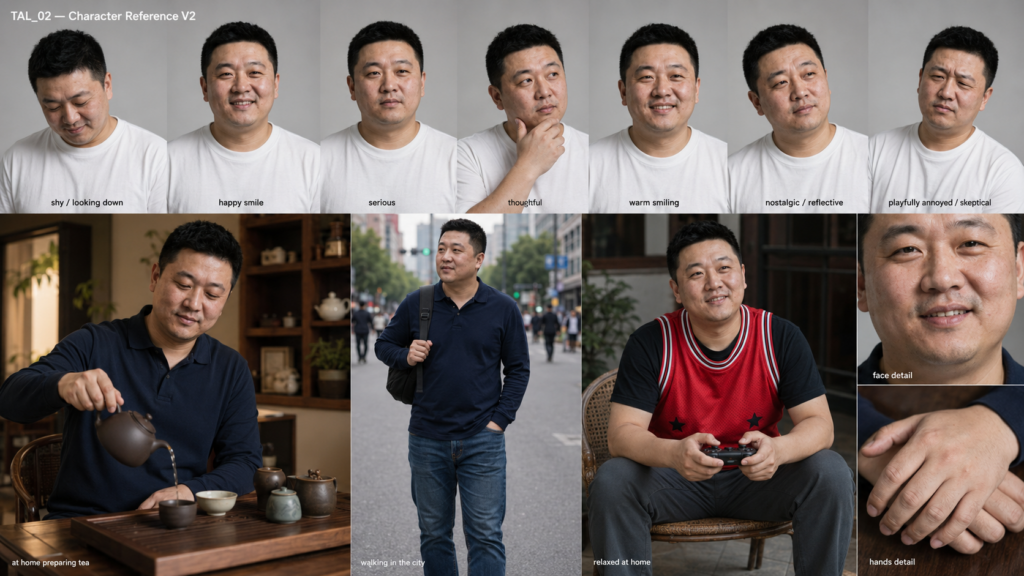
Reference sheets and visual prompts were used to maintain consistency across different generated scenes. The priority was not perfect control over every frame, but enough continuity to make the piece feel coherent and usable within an editorial workflow.
Special attention was given to eye direction, emotional tone, believable facial expressions, non-repetitive framing, natural corporate wardrobe and consistency between generated clips.

Reference control was used to reduce identity drift and maintain believable performance continuity.

3. AI-Assisted Production

Generative AI tools were used as part of the production layer, especially for creating interview-style material, character-driven moments and supporting visual sequences.
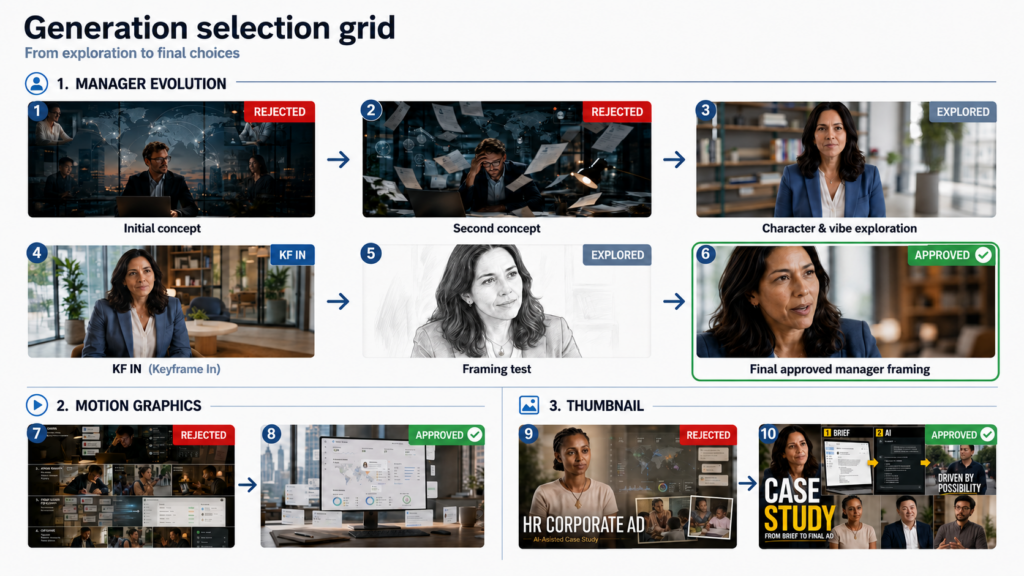
The process required prompt refinement, reference-based generation, selection between multiple outputs, rejection of visually inconsistent material, editorial assembly and post-production correction.
The workflow confirmed that AI generation is not a one-click replacement for production. It still requires direction, taste, visual judgement and a strong understanding of how images work once they enter an edit.

Generated material was selected and curated like production footage.

4. Editing and Post-Production

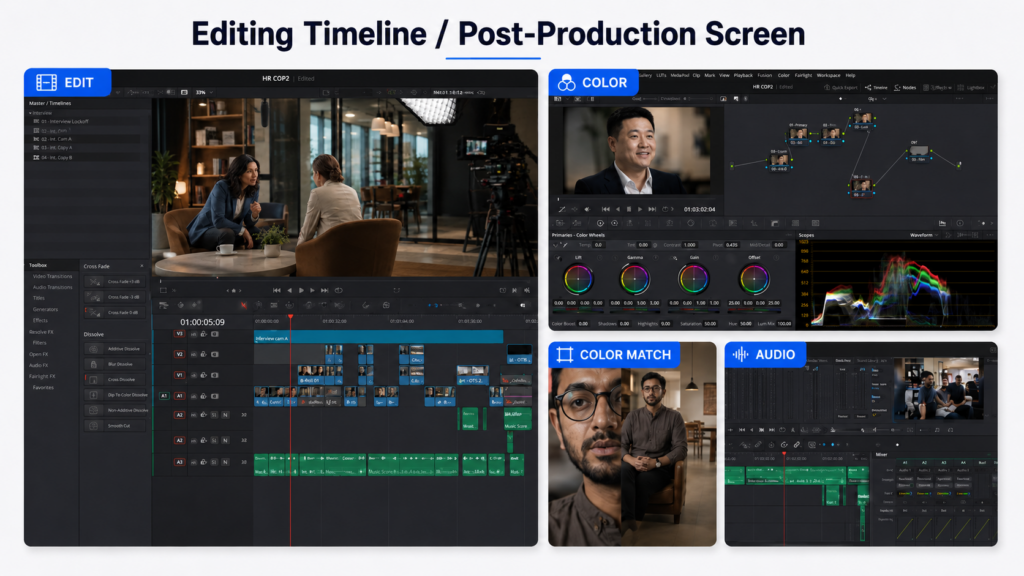
The generated clips were treated as raw production assets and shaped through a traditional post-production pipeline.
The final result was built through editing, pacing and structure, visual continuity checks, color/look refinement, motion graphics where needed, sound and ambience direction, and final quality control.
This stage was essential to make the project feel less like a collection of AI shots and more like a finished corporate piece.

Post-production transformed generated clips into a coherent film language.

5. Final Finishing

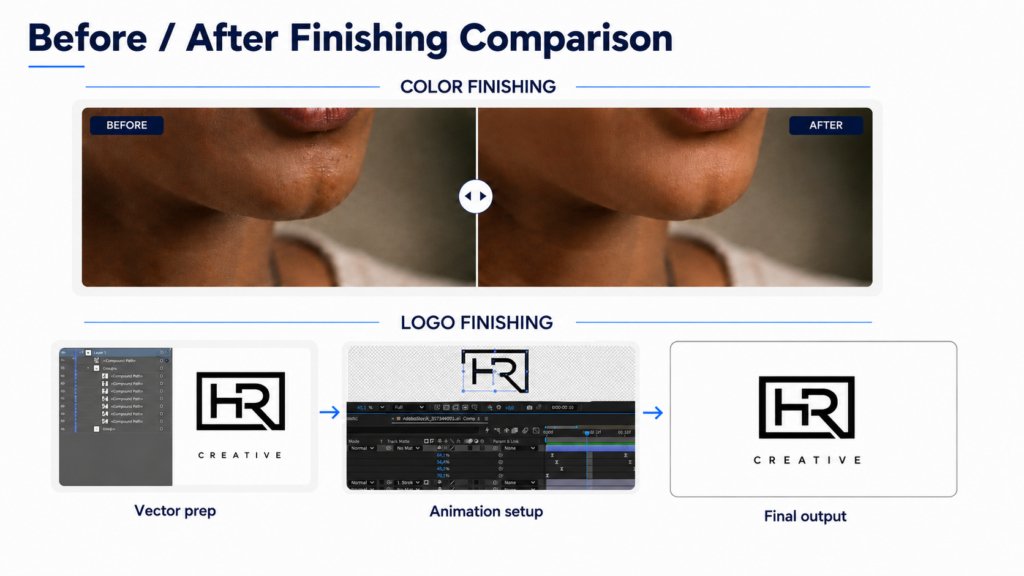
The finishing stage focused on making the piece visually coherent and usable as a portfolio-facing corporate asset. This included editorial tightening, consistency checks, final color decisions, sound direction and export control.

The final look was shaped through editorial and finishing decisions, not only through generation.

TOOLS AND PIPELINE

The workflow combined generative AI tools with traditional post-production software.
AI and creative development tools included ChatGPT, Higgsfield / HGS Cinema Studio, image and video generation tools, reference-based prompting workflows, voice and performance-oriented testing.
Post-production tools included DaVinci Resolve, Adobe After Effects and standard professional editing / finishing workflows.
The most important element was not the individual tool, but the pipeline: how concept, hook strategy, visual direction, AI generation, editorial selection and post-production were connected into one controlled process.

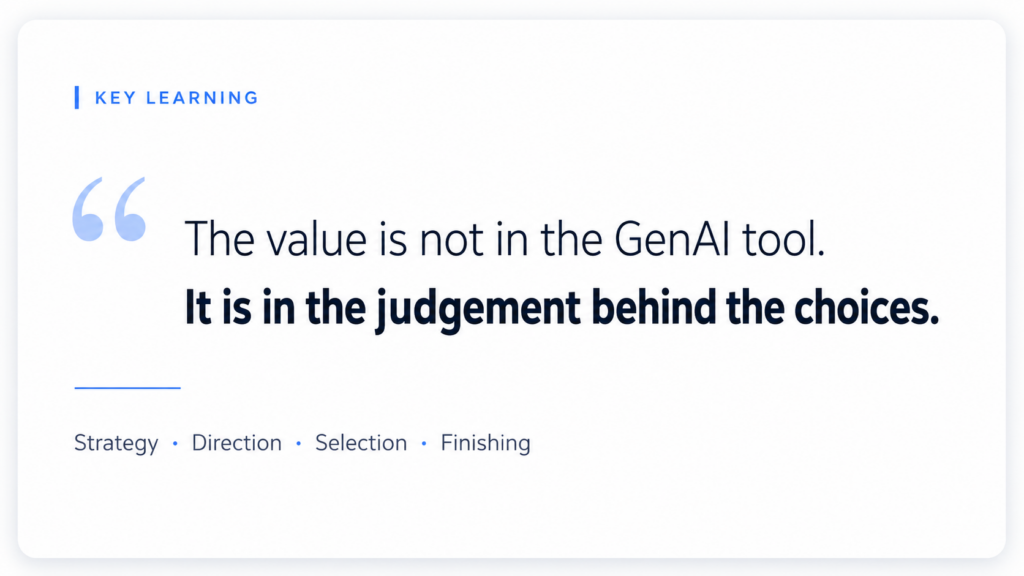
The value is in the controlled pipeline, not in one specific tool.

KEY LEARNINGS

This case study reinforced several important points about AI-assisted production:
• AI works best when directed, not simply prompted: the strongest results came from clear creative intention, precise visual references and strict editorial selection.
• Traditional production experience remains essential: understanding framing, performance, pacing, lighting, continuity and post-production is what makes the generated material usable.
• Consistency is the main creative challenge: the workflow must be designed around controlling identity, tone, framing and visual logic across multiple assets.
• AI-assisted production still needs communication strategy: the effectiveness of the piece depends not only on visual generation, but on how the first seconds are structured to create attention, emotional access and message clarity, and on how the message is crafted.
• Post-production is where the project becomes a film: editing, rhythm, finishing and quality control transform generated outputs into a coherent final piece.

AI-assisted production still depends on strategy, direction, selection and finishing.

WHAT THIS CASE STUDY DEMONSTRATES

This project demonstrates my ability to combine cinematic storytelling, corporate and institutional communication experience, short-form hook strategy, post-production leadership, AI-assisted visual development, prompt direction and workflow design, editorial judgement and final delivery control.

It reflects the area I am currently developing professionally.

The integration of traditional video production expertise with practical, responsible and production-oriented GenAI workflows.
The objective is not to replace filmmaking craft, but to expand what can be prototyped, tested and produced with speed, control and creative intention.

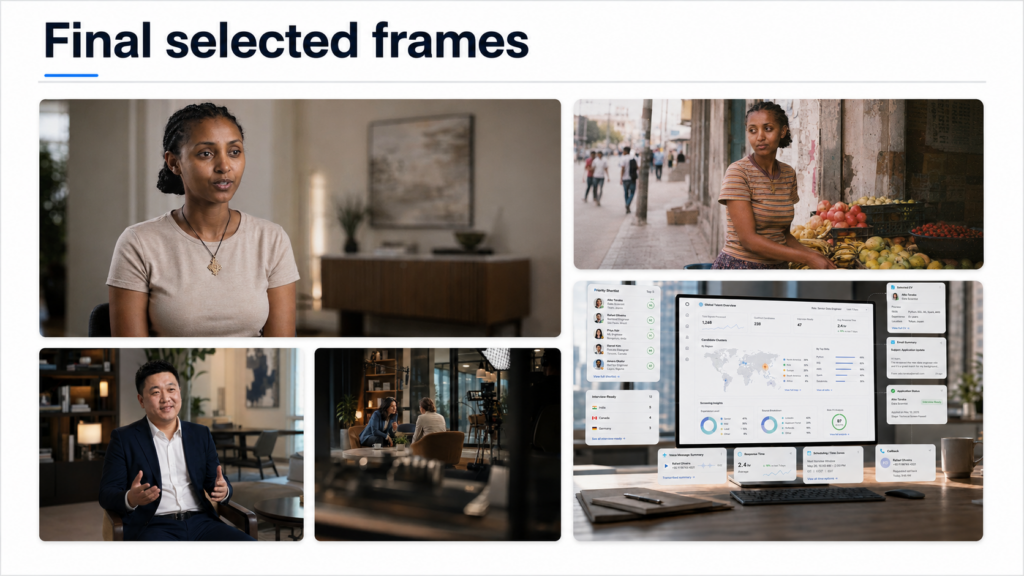
Selected frames from the final corporate ad.

FINAL NOTE

This is a fictional case study developed for portfolio and research purposes.

It was created to test a practical AI-assisted production pipeline for cinematic corporate communication, with a focus on creative direction, consistency, post-production and professional usability.

WATCH THE FINAL VIDEO

View more selected work or get in touch.